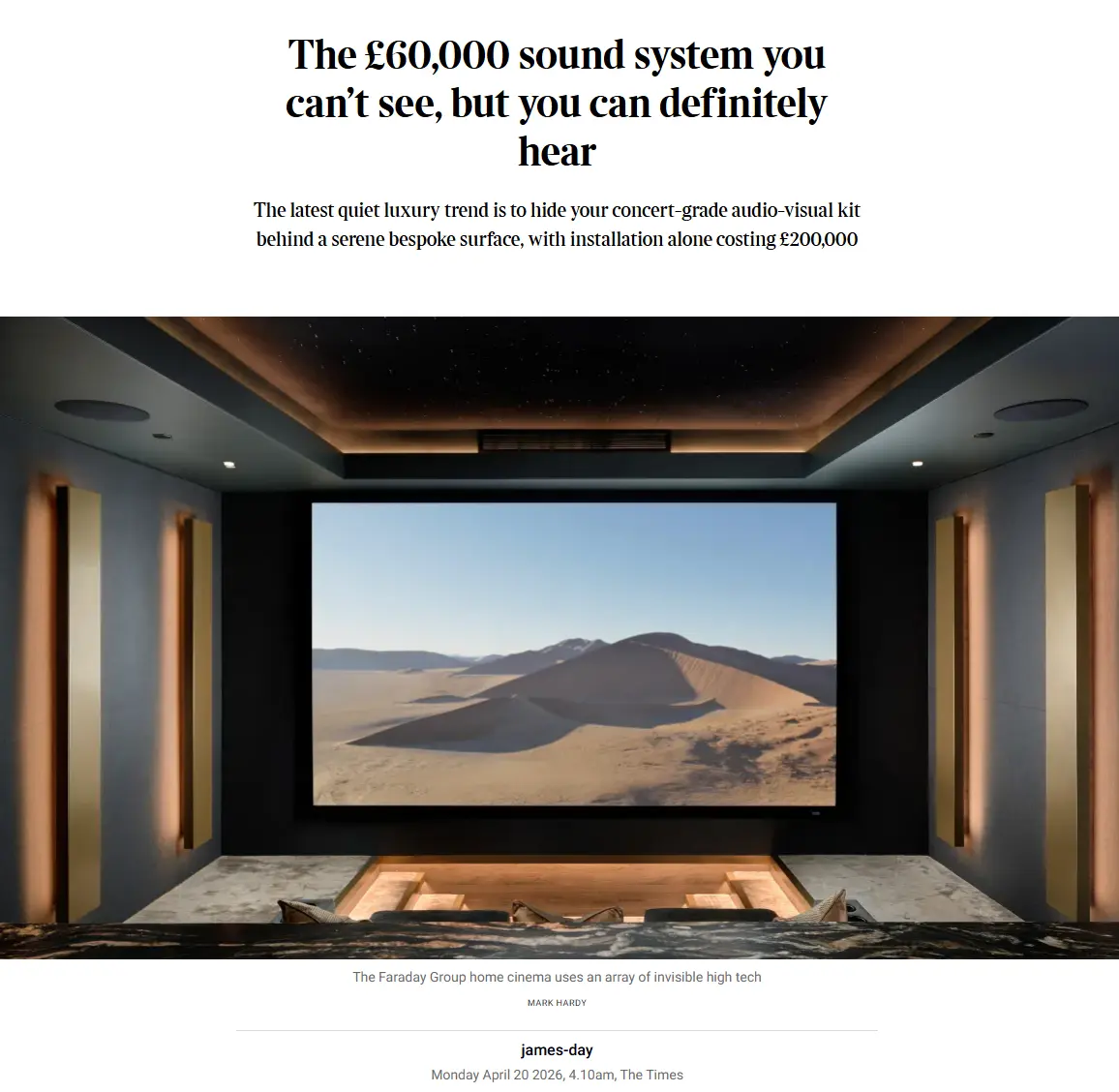
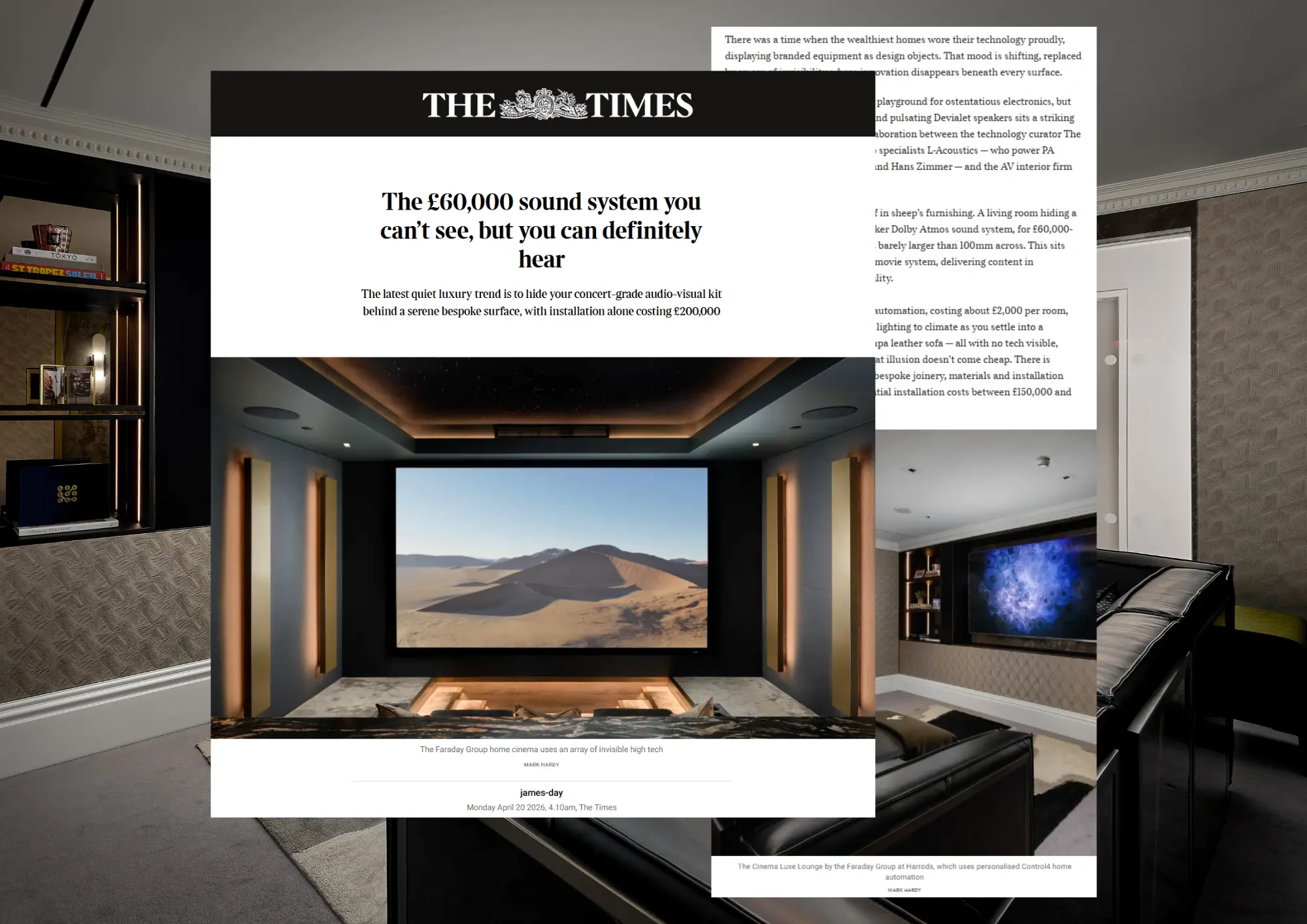
James Day’s feature in The Times this week visits the Cinema Luxe Lounge on the fifth floor of Harrods — a collaboration between The Faraday Club, IndigoZest, L-Acoustics, and Cinema Luxe — and finds a room that conceals more than it reveals.
Beneath its composed, residential interior sits a concert-grade 12-speaker Dolby Atmos system, a Kaleidescape movie platform delivering studio-master quality content, and personalised Control4 home automation managing lighting, climate, and ambience throughout. Speakers are hidden behind acoustically transparent fabrics — including cashmere and Lycra, both tested in a recording studio for sonic neutrality. Nothing announces itself. The Times describes it simply as “a wolf in sheep’s furnishing.”
The piece speaks to a broader shift in how the most considered homes approach technology: not as a display of investment, but as something that earns its place by disappearing. Paul Laventure, co-founder of The Faraday Club and Client Director here at IndigoZest, puts it plainly:
“There are only a handful of times where people actually care about the brands in the walls. If you tell them that the speakers were used in this concert or that opera house, then it’s enough.”